
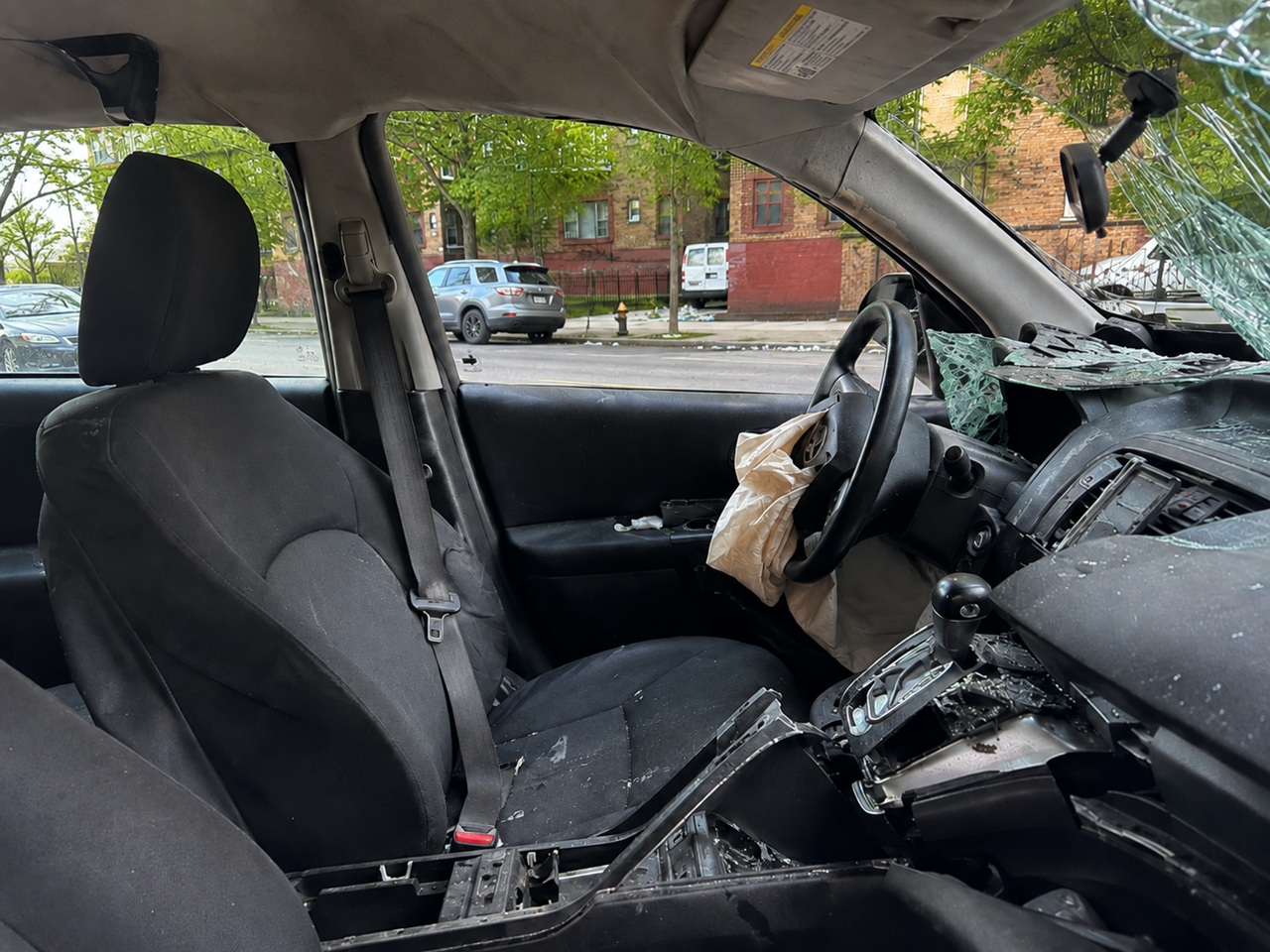
Not Wearing A Seat Belt Can Affect Damages Without Changing Who Caused The Crash
A driver runs a red light and crashes into your vehicle. The evidence clearly shows that the other driver caused the collision. Then the insurance adjuster asks whether you were wearing a seat belt.
That question can make an injured person wonder whether an otherwise strong case is suddenly in trouble. In New York, the answer is more limited than many people realize.
Failing to wear a seat belt generally doesn't change who was responsible for causing the crash. It can, however, affect compensation if the defense can prove that wearing an available seat belt would have prevented or reduced particular injuries.
Our Bronx car accident lawyers at Giampa Law regularly deal with arguments insurance companies use to reduce the value of New York injury claims. The seat belt defense is one of them, but it comes with a burden the defense actually has to prove.
New York Separates Crash Fault From Seat Belt Use
New York Vehicle and Traffic Law § 1229-c generally requires vehicle occupants to wear seat belts. But the civil consequences of violating that rule are specifically limited.
Under Vehicle and Traffic Law § 1229-c(8), failure to comply with the seat belt law is not admissible on the issue of liability. In other words, an insurance company can't argue that you helped cause a red-light crash, rear-end collision, or other accident merely because you weren't buckled in.
Seat belt evidence may instead be introduced to mitigate damages if the defendant properly pleads nonuse as an affirmative defense.
That distinction matters. New York's ordinary car accident fault rules address who caused the collision. The seat belt defense addresses whether some of the resulting injuries could reasonably have been avoided.
The Defense Has To Connect Seat Belt Nonuse To The Actual Injuries
New York's modern seat belt defense traces back to the Court of Appeals decision in Spier v. Barker. The court placed the burden on the defendant to plead and prove that failure to use an available seat belt increased the plaintiff's injuries and damages.
A general statement that “seat belts prevent injuries” isn't necessarily enough.
The defense needs competent evidence establishing a causal connection between the nonuse of an available seat belt and the injuries for which it seeks a reduction. Depending on the accident and injuries, this may involve medical testimony, biomechanics, accident reconstruction, evidence of occupant movement, or a combination of these sources.
That makes the specific injury important. A defense expert might argue, for example, that a shoulder belt would have prevented a person's head from striking the windshield. That doesn't automatically establish that the seat belt would also have prevented an unrelated knee, wrist, or psychological injury.
A New York Case Shows Why General Seat Belt Arguments Are Not Enough
A 2015 Appellate Division case provides a useful example.
In Robles v. Polytemp, Inc., a jury initially found that the plaintiff was not wearing a seat belt and reduced his damages by $200,000 as a result.
The appellate court reversed that reduction.
The defendants had presented testimony from treating physicians who said in general terms that seat belts can reduce the risk of injury. The court held that this was insufficient because the defense hadn't demonstrated, through competent evidence, that the plaintiff's injuries would have been minimized if he had been wearing a seat belt.
The result is an important practical lesson: proof that someone was unbelted and proof that the lack of a seat belt increased their damages are two different things.
Seat Belt Mitigation Is Different From Comparative Negligence
This is another point that can easily become confusing during settlement negotiations.
New York follows pure comparative negligence. If an injured person contributed to causing an accident, their total recovery can generally be reduced by their percentage of fault.
Seat belt nonuse operates differently. Under § 1229-c(8), it isn't evidence that the plaintiff caused the crash.
Consider a hypothetical example. A driver runs a stoplight and hits another vehicle whose occupant wasn't wearing a seat belt. The unbelted occupant may still bear no responsibility whatsoever for causing the collision. The defendant would separately need to prove that specific injuries were worse because the occupant wasn't restrained.
Medical Evidence Can Make Or Break The Defense
The severity and mechanics of the injuries often become central to a seat belt dispute.
A person with back or neck injuries, for example, may face arguments about occupant movement during impact. A person with a traumatic brain injury may face questions about whether the head struck the steering wheel, dashboard, window, or another interior surface.
Hospital records can also become important. In Robles, hospital records indicating that the plaintiff wasn't wearing a seat belt were admitted because they were connected to information he had provided, even though the defense ultimately failed to prove that nonuse increased his injuries.
That's another reason injured people should be accurate when discussing a crash with doctors. Medical records may later serve as evidence of both the injuries and how the accident occurred.
An Insurer Cannot Simply Apply A Blanket Seat Belt Discount
One of the most important things accident victims should understand is that New York law doesn't establish an automatic percentage reduction for failing to wear a seat belt.
There is no rule stating that an unbelted occupant automatically loses 10%, 20%, or some other fixed portion of a car accident recovery.
The defense instead has to establish what additional injuries or damages resulted from nonuse.
That matters during negotiations over a New York car accident settlement. If an adjuster tries to discount a claim because the police report or medical chart says the injured person was unbelted, the next question should be what evidence actually connects that fact to the claimed injuries.
A vague reference to “the seat belt issue” isn't the same as proving the legal defense.
The Seat Belt Defense Does Not Eliminate New York's Serious Injury Requirement
New York's no-fault insurance system creates another separate issue. To pursue certain damages against an at-fault driver, an injured person generally needs to satisfy New York's serious injury threshold or another applicable statutory basis for stepping outside no-fault.
The value of a New York car accident claim can depend on the severity of the injuries, available insurance, lost income, future medical needs, and other damages. Depending on the circumstances, an injured person may be able to pursue compensation after a car accident for both economic and non-economic losses.
The serious injury threshold, comparative negligence, and the seat belt defense are separate legal questions. An insurer shouldn't be allowed to blur them together into one generalized argument that the injured person should receive less.
Our Bronx Car Accident Attorneys Can Challenge An Unsupported Seat Belt Defense
If an insurance company is focusing on the fact that you weren't wearing a seat belt, that doesn't necessarily mean your car accident case is weak.
Our Bronx and New York City car accident attorneys can review how the crash occurred, the medical records, the types of injuries involved, and any expert opinions the defense relies upon. We can also determine whether the seat belt defense has actually been supported by evidence or is simply being used as settlement leverage.
We have obtained substantial recoveries in New York motor vehicle cases, including a $1.5 million rear-end accident settlement, a $1.4 million rear-end car accident settlement, and multiple seven-figure pedestrian recoveries. Prior results do not guarantee a similar outcome.
If an insurer is arguing that seat belt use should reduce your compensation, contact us for a free case consultation. We can explain how New York's seat belt defense applies to the specific injuries and evidence in your case.
"The best lawyer in New York State." - Chris M., ⭐⭐⭐⭐⭐