
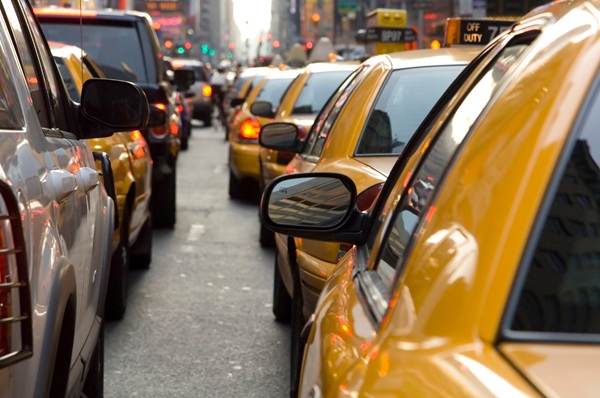
Stop-and-go traffic feels slow and harmless, but that same creeping congestion is where a single glance at a phone can result in a car accident. A driver thinks traffic is barely moving and looks down just for a second.
Suddenly, a hard rear‑end crash leaves someone in the front vehicle with a torn disc, a concussion, and months of pain.
When someone else’s distraction in bumper‑to‑bumper traffic puts you in the doctor’s office instead of at work or with your family, it’s not an accident; it’s a choice.
Why Distracted Driving in Stop-and-Go Traffic Is So Dangerous
In the grinding congestion of NYC streets, drivers often fall into a false sense of security, assuming low speeds make multitasking "no big deal." This misconception is exactly what makes stop-and-go traffic so hazardous.
April is Distracted Driving Awareness Month, and National Highway Traffic Safety Administration (NHTSA) data from 2024 highlights the cost of this bad driving habit, with over 315,000 injuries and roughly 3,200 deaths linked to distraction.
In 2026, as Bronx and Manhattan roadways remain more packed than ever, a single text in a "crawling" lane can trigger a high-impact rear-end collision before the driver even realizes the car ahead has stopped.
To understand why this happens so often, it helps to look at the different ways distraction shows up behind the wheel.
- Visual distraction: Taking eyes off the road to read a text, glance at a social media post, or look down at a navigation app.
- Manual distraction: Taking one or both hands off the wheel to type, scroll, eat, reach for something, or adjust controls.
- Cognitive distraction: Letting the mind drift away from driving because of stress, daydreaming, or a heated conversation.
The Mechanics of Chain-Reaction Crashes in NYC Congestion
Several factors come together in stop-and-go traffic to turn distraction into a much higher risk than drivers realize.
- Short Following Distances: In congestion, drivers crowd together, worried that leaving space will invite someone to cut in. When a driver is tailgating and looks down at a phone, there is almost no buffer. A delayed reaction of even half a second can turn into a hard rear‑end crash, especially if the car ahead has already stopped.
- Constant Sudden Braking: Stop-and-go traffic creates waves of braking that move like ripples through a line of vehicles. One small tap several cars ahead can translate into a near‑full stop for the drivers behind. A distracted driver in the middle of this wave often reacts too late or too forcefully, which is how multi‑car pileups begin.
- Multiple Conflict Points: Packed traffic is also dynamic traffic. Vehicles are merging from ramps, jumping into “faster” lanes, and moving around large trucks that block sight lines. If a driver glances away for a few seconds, that’s often when someone else decides to change lanes, cut across, or brake hard.
- Uneven Speeds: Even when the road feels slow overall, individual drivers accelerate and decelerate at different rates. A driver who guns it to close a gap while the car ahead is nearly stopped can hit with surprising force, causing whiplash, back injuries, and head trauma.
- Aggression And Frustration: Congestion raises tempers. Drivers who are already frustrated are more likely to tailgate, weave, or brake‑check. When distraction is layered on top of that emotional state, small errors become bigger, faster.
Establishing Fault in New York Rear-End and Multi-Car Claims
From a legal standpoint, distracted driving in congestion is still negligence. New York law specifically prohibits drivers from using a handheld cell phone or texting while driving, and a violation of these rules can serve as strong evidence of negligence in a crash.
However, liability in a chain-reaction crash is rarely as simple as it looks.
In New York, while the following driver is generally presumed at fault in a rear-end collision, insurance companies frequently try to shift blame by claiming the lead driver stopped too suddenly.
We counter these tactics by digging into the "digital trail" of the at-fault driver. If we can prove they were engaged with a handheld device or navigating an app at the moment of impact, the "sudden stop" argument falls apart.
At Giampa Law, we understand how to unravel these multi-car disputes to ensure the person who was actually distracted is held fully accountable. Our firm often looks for evidence such as:
- Phone and app usage records around the time of the crash
- Vehicle data showing speed and braking patterns
- Traffic camera, security camera, or dashcam footage
- Witness statements describing a driver looking down or holding a phone
Bypassing the No-Fault Limit After an NYC Congestion Crash
Because New York is a no-fault insurance state, many drivers assume they are limited to their own Personal Injury Protection (PIP) benefits after a low-speed congestion crash.
However, if your injury meets the "serious injury" threshold under New York Insurance Law § 5102(d), you can step outside the no-fault system to pursue full compensation from the distracted driver.
At Giampa Law, we help clients document the medical evidence needed to prove their injury qualifies for a lawsuit, including:
- Fractures or Permanent Loss: Injuries that immediately bypass no-fault limits and allow for a direct claim.
- Significant Limitation of Use: Medical proof that a neck, back, or joint injury has restricted your range of motion or daily function.
- The 90/180 Day Rule: Evidence that your injury prevented you from performing substantially all of your usual daily activities for at least 90 of the 180 days following the crash.
Even if the impact felt minor at the time, the long-term effects on your ability to work and live your life are what truly define the value of your claim. We focus on the medical documentation that forces insurance companies to acknowledge the severity of your situation.
What Drivers Can Do To Stay Safer In Heavy Traffic
Drivers can’t control whether a crash happens in front of them, but there are practical ways to cut down the risk in stop-and-go conditions.
- Before Driving: Drivers should set their routes, start music or podcasts, and turn on their phone's “Do Not Disturb” mode so notifications don’t keep pulling their eyes away from the road.
- While In Congestion: Drivers should keep a visible space between their vehicle and the car ahead, and resist the urge to close every gap instantly.
Bronx-Tough Advocacy for Stop-and-Go Injuries
The legal team at Giampa Law knows that a "minor" bumper-to-bumper tap in heavy traffic can still result in life-changing spinal damage or a traumatic brain injury. We don't accept the insurance company’s narrative that a slow-speed crash is a "minor" event.
Instead, we use a trial lawyer’s approach to uncover the truth—subpoenaing records and analyzing vehicle data—to build a case that reflects the full reality of your recovery. Our process includes:
- Immediate Investigation: Securing crash-site evidence, such as dashcam and storefront footage, before it's overwritten.
- Insurance Management: Handling all communications with adjusters so you aren't pressured into a lowball settlement.
- Litigation Preparation: Preparing every case as if it is going to trial to ensure we have maximum leverage during negotiations.
If you were hurt because another driver chose their phone over your safety, we're ready to fight for the compensation your family deserves. Contact us today to book a free, no-obligation case consultation.
“I was referred to Giampa for my 2nd case, and when I met Zach, I immediately hired him for my 1st case as well. His staff is very pleasant. He exceeded my expectations. I’m so happy with my settlements. Great firm!” – L.A., ⭐⭐⭐⭐⭐